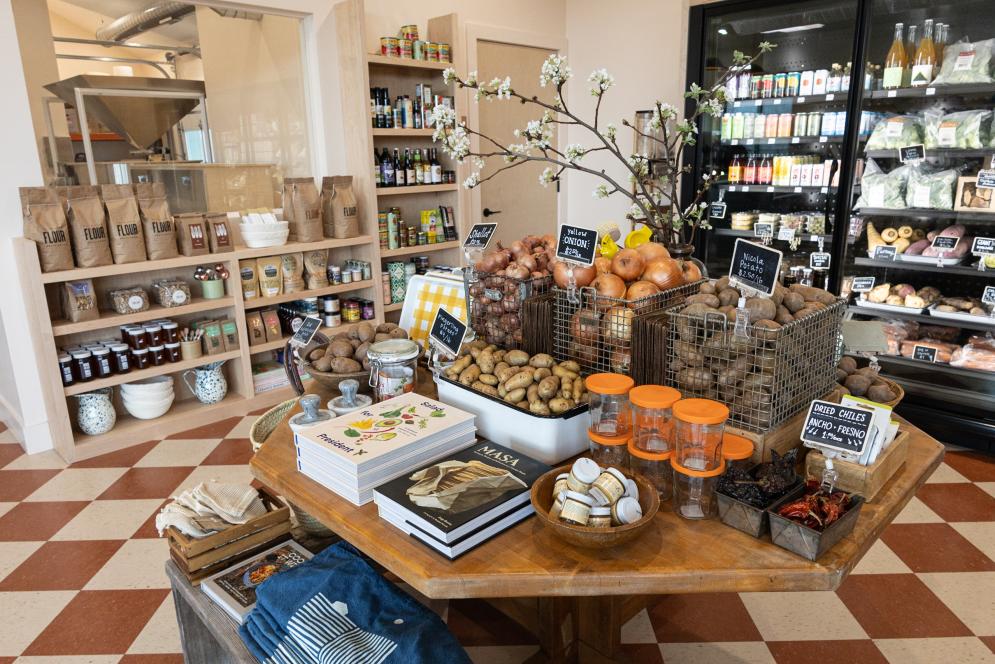
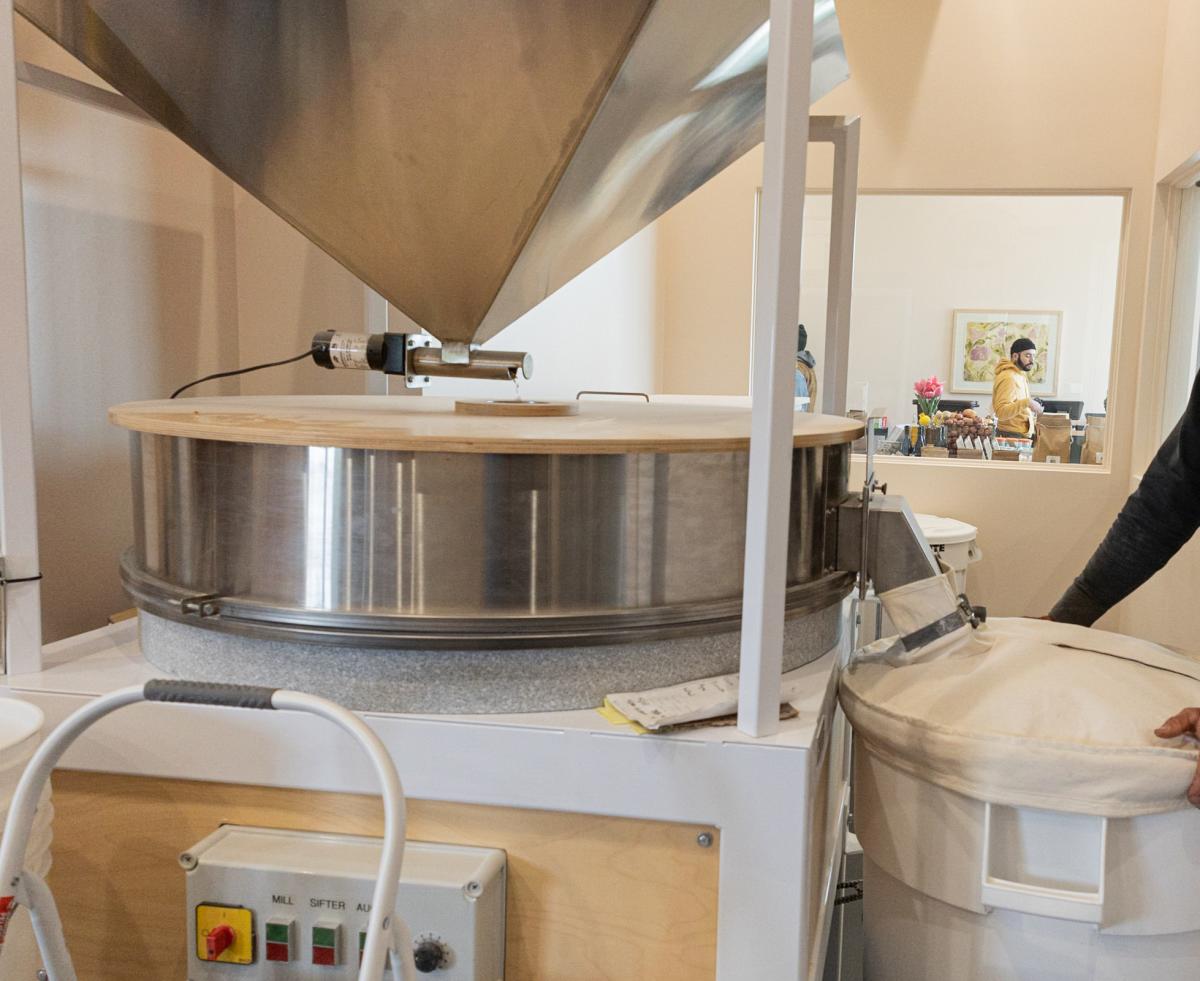
What do you do when you are searching for Michigan-grown, organic, heirloom grain and there’s none to be found? The answer to that question was easy for Gary Jonas and Nic Theisen, owners of Farm Club restaurant near Traverse City. You work directly with hand-picked farmers and grow your own. Then you add a new building to support the 48-inch stone flour mill and a store to sell the bakery products that the wheel creates.
“This is a game-changer,” Jonas said. “We’re milling the freshest flour you’re ever going to have. It’s grown in a sustainable way that’s not using any pesticides or herbicides. It is a far superior product.”
Farm Club is onto a trend that is just picking up around the world, according to baker Martin Sorge. As the previous winner of the Great American Baking Show, Sorge is a self-professed “baking nerd.” He weighed in on this new trend from Germany, where he is studying to be a Bread Sommelier (yes, that’s a real thing and not a made-up title.) Sorge says micro-milling operations are popping up in many places, and they bring unique flavors. “It really tastes different than if I buy a bag of rye flour from a grocery store. It has an almost cinnamon spice note. You know, very delicate, but it has a much richer flavor than just the regular rye flour.”
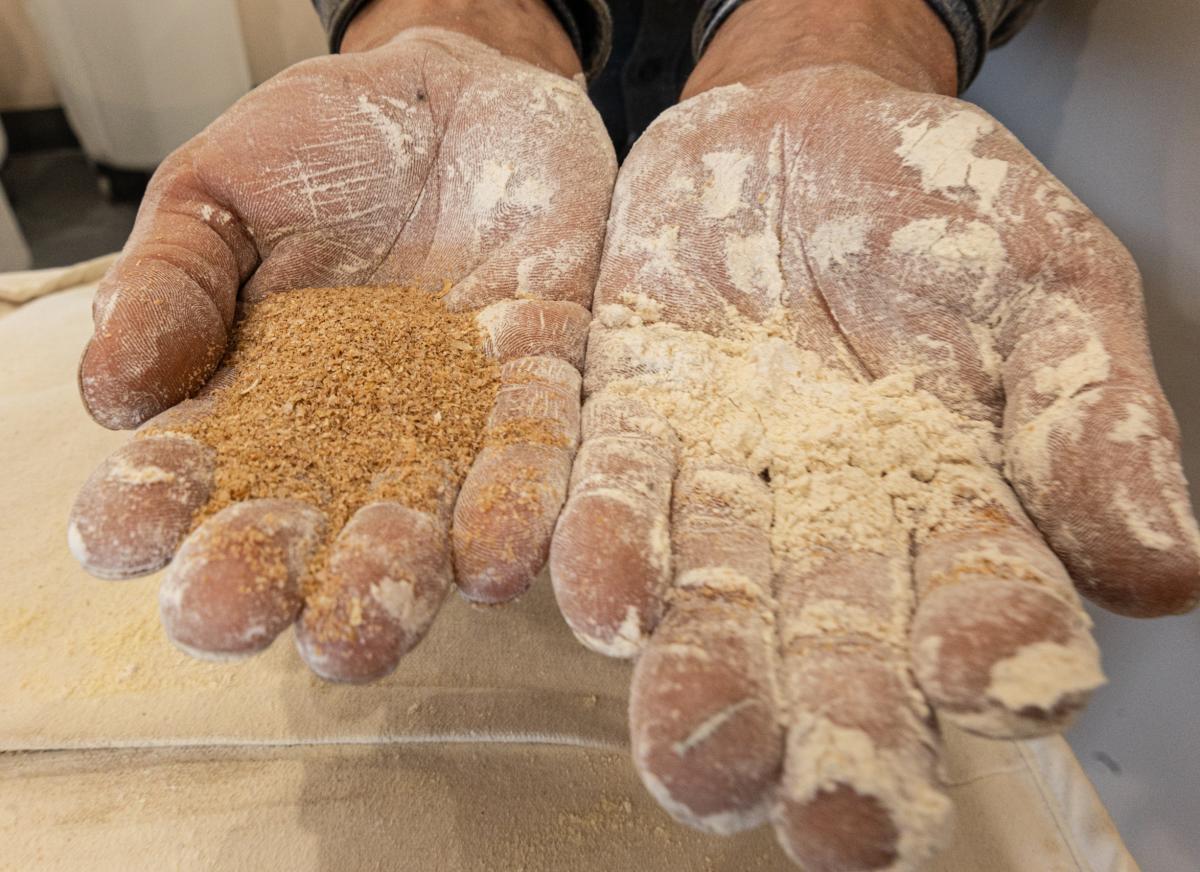
These small mills result in fresher flour; the bags are not sitting on a shelf for months. They also reflect the growing conditions and agricultural community of the region. Here in northern Michigan, those growing conditions are formed by a micro-climate courtesy of the Great Lakes, and a sandy soil created 12,000 years ago by receding glaciers. Much like wine vintages are impacted every year by growing conditions, the same can happen with growing grains for bread. A wetter growing season can impact the grain and flavor. Micro-milling operations, like Farm Club, reflect the seasonal growing conditions.
Farm Club is milling a variety of grains, including rye, buckwheat, spelt, multiple varieties of wheat, and other grains. Jonas is proud of the fact that they are milling the whole grain. “When you eliminate the brown part, it’s really just sugars and the bad part of the grain.” Farm Club keeps the whole grain and doesn’t remove the bran and the germ, so you end up with a healthier product. The Farm Club mill makes a healthier product.
“Without the bran and the germ, you’re not getting fiber,” said Theisen. “Fiber is essential to a healthy digestive tract. You’re losing a lot of the healthy oils and the healthy vitamins that you get from the whole grain. It’s more digestible. It’s higher in vitamins. It’s higher in fiber. And it tastes better.” According to Sorge, it’s not only healthier, but it creates a whole new palate for not only chefs, but also the consumer. “I know what flavors it will bring to my bread or my cookie,” Sorge said. “What these small mills are doing is introducing folks to another flour, or freshly milled whole grain flour. I think that is what gives customers, you know, a bigger almost punch of flavor.”
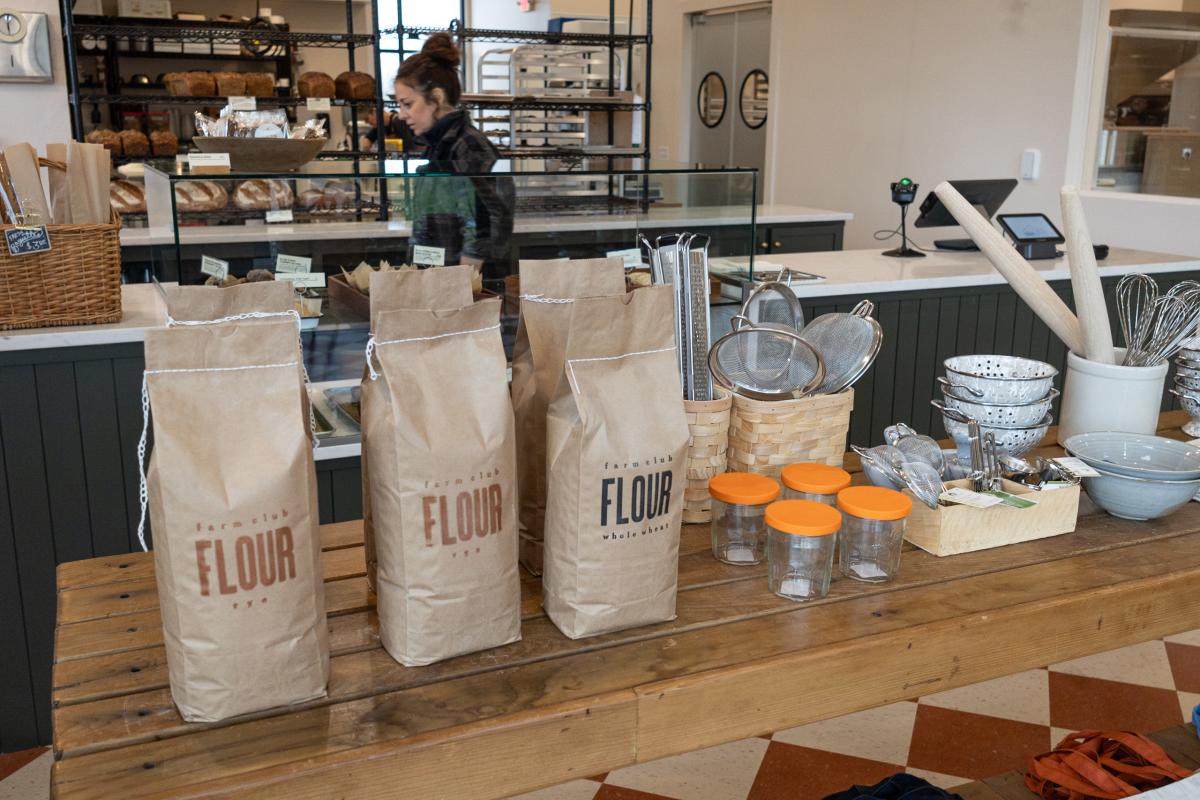
That grain takes center stage on the tables at Farm Club in their breads, pastries, and pastas. Plus, their flour is being used at places like Bubbies Bagels, Sugar 2 Salt, and the Cooks’ House.
Farm Club is not alone in the Traverse City region in milling its own grain. Micro-mills can be found at 9 Bean Rows in Suttons Bay and The Mill in Glen Arbor. From Theisen’s perspective, this is just an example of these micro-mills starting a new, but growing trend that pays attention to locally sourced agriculture. In Michigan, you will also find small mills in Holland, Lapeer, and at Zingerman’s in Ann Arbor.
The trend not only benefits consumers, but it also helps the farmers. “I wholeheartedly believe that bread should be affordable, and that farmers should make a living,” said Theisen. He believes consumers will enjoy the difference. “You know, I love baking bread. Well-made bread with organically grown grains and whole grains is not only the bed stone of our diet, but the bed stone to longevity and health. I think it comes from stone milling.”
Farm Club is located in Leelanau County, about seven miles north of Traverse City. In addition to the restaurant and bakery, they have a brewery, market, and are supported by vegetables and herbs grown at the nearby Loma Farm. The farm produces most of the product used for the restaurant. Loma Farm is also owned and operated by Farm Club.
Sorge is a part-time resident of the Traverse City region and splits his time between his home in Chicago. He will be featured in the 2026 Traverse City Food & Wine Festival in August at the event From Mill to Table: Baking with Whole & Stone-Ground Grains. Sorge will release his first book in August called: Great Bakes: Modern Classic Recipes from the Midwest.